| Measure for Measure | ||||
|---|---|---|---|---|
 |
|
|||
 |
 |
|||
| Plot Summary: | |
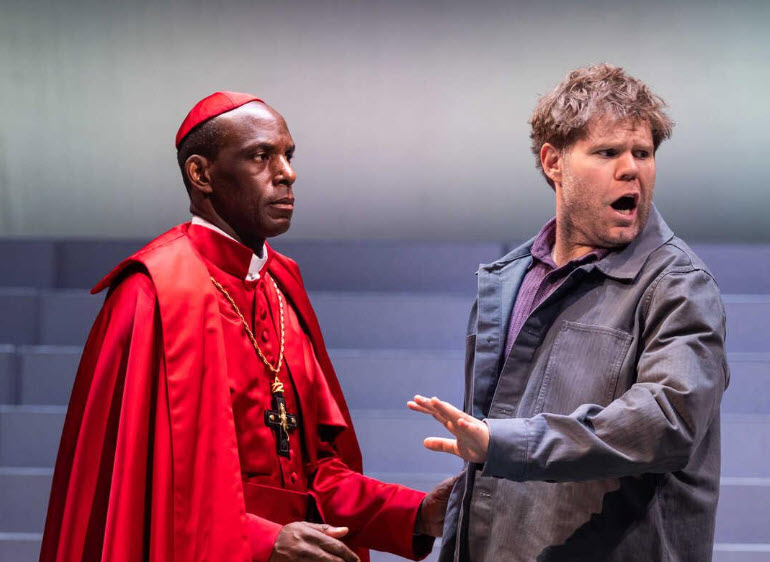
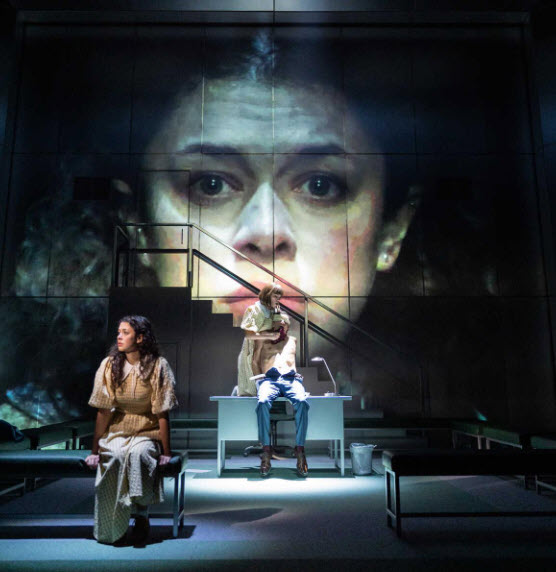
Measure for Measure is a dark comedy set in Vienna, where Duke Vincentio temporarily leaves the city and appoints his strict deputy, Angelo, to enforce the neglected laws. Secretly, the Duke remains in Vienna disguised as a friar to observe what happens in his absence. Angelo begins to govern harshly, sentencing Claudio, a young man, to death for impregnating his fiancée, Juliet, before marriage. Claudio’s sister, Isabella, a novice nun, pleads for mercy. Though moved by her virtue, Angelo becomes lustful and proposes that he will spare Claudio’s life if Isabella sleeps with him. Horrified, she refuses and threatens to expose him—but Angelo knows no one will believe her. The disguised Duke learns of this and devises a plan. He arranges a “bed trick,” substituting Angelo’s former fiancée, Mariana, in Isabella’s place. Believing he has possessed Isabella, Angelo orders Claudio’s execution anyway to cover his sin. The Duke intervenes just in time, revealing his true identity, exposing Angelo’s corruption, and saving Claudio. In the end, justice is tempered with mercy: Angelo is forced to marry Mariana, Claudio is reunited with Juliet, and the Duke proposes marriage to Isabella, leaving her reply ambiguous. The play closes with questions about morality, power, and forgiveness. |
|
 |
 |
|||
|---|---|---|---|---|
| Main Characters and Their Roles: | |
Duke Vincentio – The ruler of Vienna. He temporarily leaves the city under Angelo’s rule to observe how justice is carried out, disguising himself as a friar to secretly monitor events. Angelo – The Duke’s strict deputy. Known for his apparent virtue, he becomes corrupt when he lusts after Isabella and abuses his power, revealing the hypocrisy of rigid moralism. Isabella – Claudio’s sister, a novice nun. She embodies purity and moral integrity, and her plea for mercy exposes both Angelo’s hypocrisy and the play’s central tension between justice and compassion. Claudio – A young gentleman sentenced to death for premarital sex with Juliet. His plight drives the play’s moral and political conflicts. Juliet – Claudio’s betrothed, who is pregnant with his child. Though she appears briefly, her situation highlights the harshness of Angelo’s laws. Lucio – A witty, immoral gentleman who provides comic relief and commentary on Vienna’s corruption; he later faces punishment for slandering the Duke. Escalus – A wise and merciful advisor to the Duke. He contrasts Angelo’s severity with his balanced sense of justice. Mariana – Angelo’s former fiancée, whom he once abandoned. She participates in the Duke’s “bed trick” plan and ultimately marries Angelo. Provost – The warden of the prison. He is an honest man caught between following orders and following his conscience. Pompey (Pompey Bum) – A clownish pimp who represents Vienna’s moral decay and appears in the play’s comic subplots. Mistress Overdone – A brothel keeper who is repeatedly punished under Angelo’s strict laws. Elbow – A bumbling constable, used for comic effect and satire of law enforcement. Barnardine – A long-imprisoned murderer who refuses execution, symbolizing defiance and the limits of authority. Friar Peter – A real friar who assists the Duke in his schemes.
|
|
| Quotes: | |
|
|
| Key events in each act: | |
Act 1
Act 2
Act 3
Act 4
Act 5
|
|
|---|